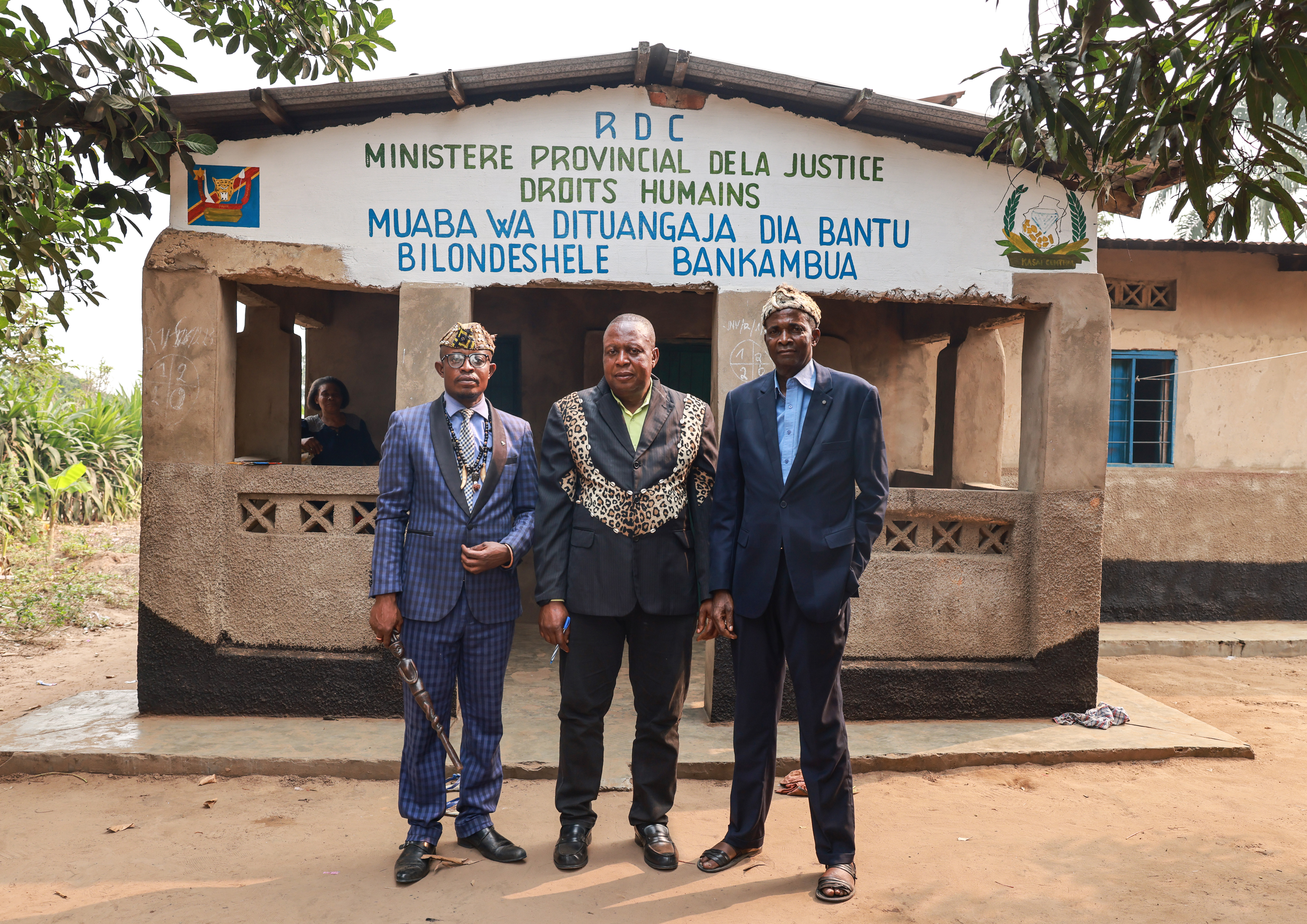
In Kananga, DRC, the Provincial Ministry of Justice of Kasai Central implemented a randomized legal capacity building program at scale aimed at mediating property, debt, and theft disputes between its citizens. This program has (i) a “formal” legal capacity arm in which state lawyers serve as neighborhood legal representatives and (ii) an “informal” legal capacity arm in which neighborhood customary chiefs perform the same functions. We study how the program influences dispute resolution and perceptions of the competence and impartiality of state and customary systems. In turn, we investigate how these differentiated outcomes shape property rights security, crime, violence, and tax compliance.
Legal Antecedents of Fiscal Capacity
In Kananga, DRC, the Provincial Ministry of Justice of Kasai Central implemented a randomized legal capacity building program at scale aimed at mediating property, debt, and theft disputes between its citizens. This program has (i) a “formal” legal capacity arm in which state lawyers serve as neighborhood legal representatives and (ii) an “informal” legal capacity arm in which neighborhood customary chiefs perform the same functions. We study how the program influences dispute resolution and perceptions of the competence and impartiality of state and customary systems. In turn, we investigate how these differentiated outcomes shape property rights security, crime, violence, and tax compliance.